How Managers Hold It All Together
Updated: Aug 21
In a school cafeteria, everything moves fast from the first breakfast to the last lunch served. But have you ever stopped to wonder what your manager does behind the scenes? Understanding the manager’s role, pressures and responsibilities helps every employee see the bigger picture—and why your support matters.

What a School Nutrition Manager Really Does
School nutrition managers are the link between district leadership and the kitchen. They take the menus, budgets, and rules set by directors and turn them into real meals for students every day. That means:
Forecasting how many meals will be served and adjusting for field trips or special events.
Counting inventory, setting par levels, and placing orders so the right products arrive at the right time.
Documenting production records for compliance and planning.
Reviewing point-of-sale reports, reconciling deposits, and handling banking tasks.
Answering parent, nurse and teacher questions about menus, allergies, or student accounts.
Entering payroll, scheduling staff, and balancing labor with meal counts.
Training and coaching staff on food safety, portioning, and new procedures.
Assisting with prep and service duties.
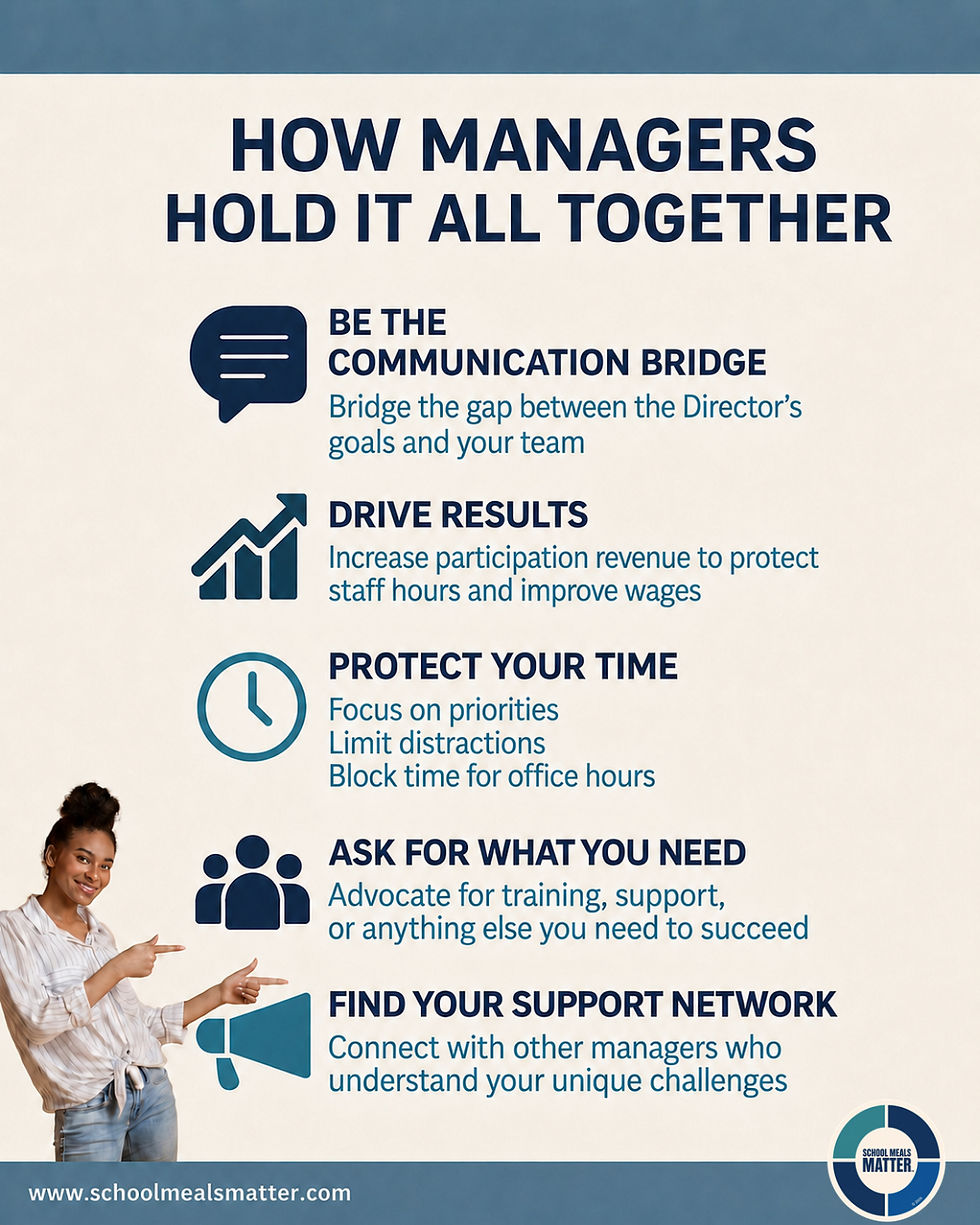
Managers also serve as the communication bridge—sharing updates from directors and bringing staff feedback upward. They’re juggling multiple demands at once to protect the program and the people in it.
Why Managers Need Strong Teams
Managers may be the link between directors and the kitchen, but they can’t do it alone. A strong, dependable team is what makes it possible to meet student needs, hit participation goals, and keep the kitchen safe and organized. When staff show up, follow procedures, and share ideas, managers can focus on the bigger picture—like planning, training, or advocating for better equipment. A strong team also protects your hours and wages. More participation means more meals served, which drives more revenue for the program. That revenue helps fund staff time and positions. When everyone works together, the whole kitchen benefits.
Final Thoughts
Cafeteria managers are the glue that keeps the program moving. Strong teams help managers do these things well by showing up, following procedures, staying flexible, and sharing ideas. When staff are dependable, communicate clearly, and support one another, it frees the manager to focus on planning, training, and advocating for the program. The result is smoother service, higher food quality, happier students, and a program that stays financially healthy. A positive professional kitchen culture makes work more enjoyable for everyone.